
How Hard Water in Casa Grande Shortens the Life of Your Plumbing
Water heaters
By Chris Guerra · Licensed Plumber, ROC #339040 Updated July 2026 · 6 min read
In This Post
Have a plumbing problem?
Free estimates. Flat rate pricing. One-year warranty on parts and labor.
Hard water is the most expensive thing coming out of your tap. Pinal County has some of the hardest in Arizona, and if you live in Casa Grande, it is already working against your water heater, your fixtures, and every appliance in the house.
What Hard Water Actually Is
Hard water is water carrying dissolved calcium and magnesium. The higher the concentration, the harder the water. The U.S. Geological Survey classifies anything above 180 mg/L as very hard, and water across the Phoenix metro and Pinal County is reported well above that line.
Those minerals do not stay dissolved forever. Heat and pressure force them out of solution, and they settle on whatever surface is nearby. Inside a water heater tank, that means a layer of sediment on the bottom. Inside a faucet cartridge, it means grit where moving parts have to seal.
Hard water and Your Water Heater
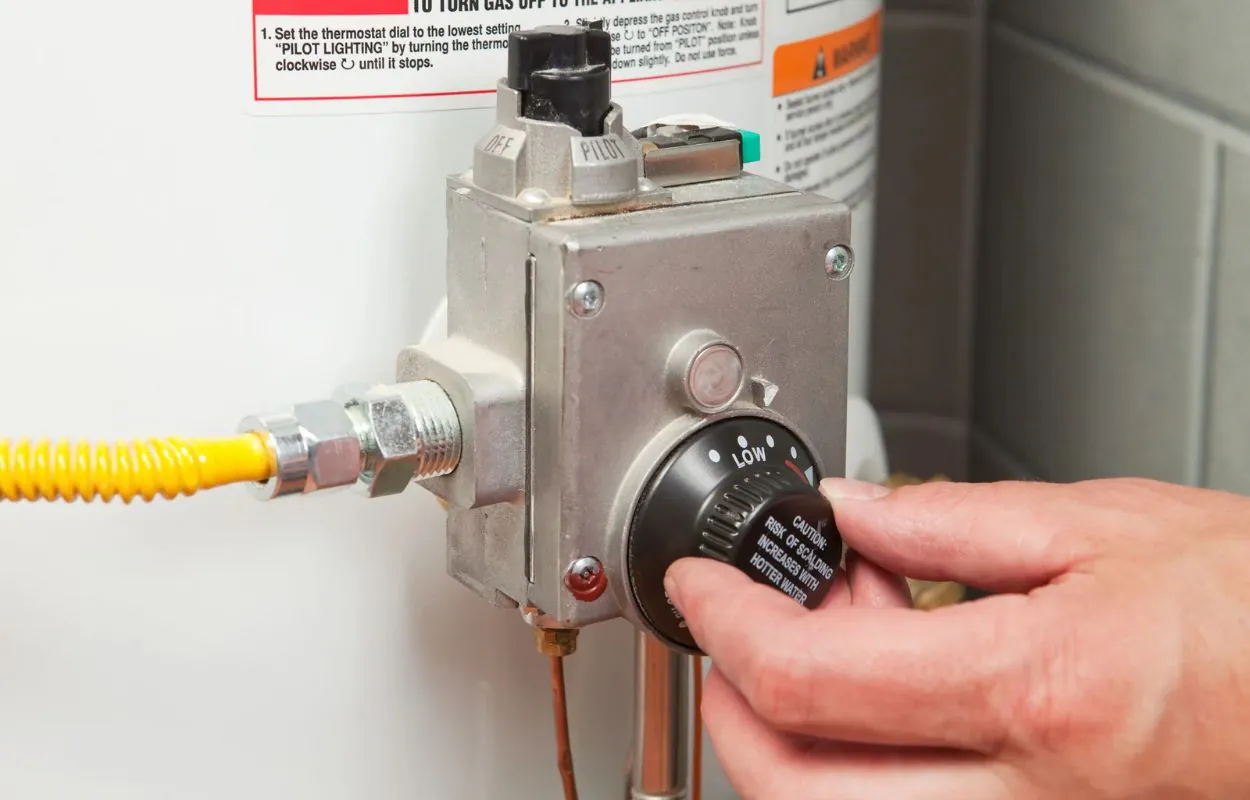
The water heater takes the worst of it. Every gallon that enters the tank leaves a small amount of mineral behind, and that sediment collects at the bottom where the burner or lower element sits.
- Sediment insulates the burner from the water, so the unit runs longer to reach the same temperature
- Longer run times mean higher energy bills and more thermal stress on the tank
- Trapped water under the sediment boils and pushes through, which is the rumbling or popping you hear
- The tank lining degrades faster, and once the tank itself goes, repair is off the table
What It Does to Fixtures and Appliances
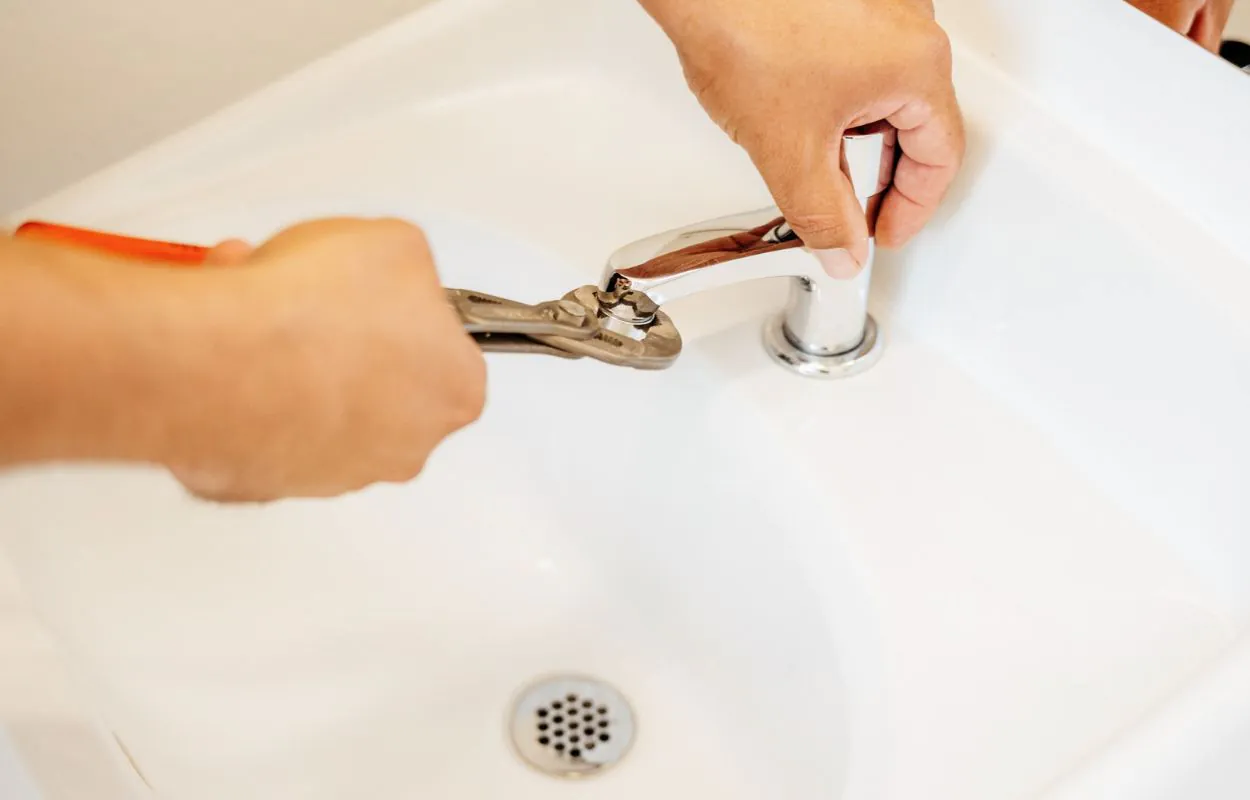
Faucet cartridges, shower valves, and toilet fill valves all rely on small moving parts sealing against each other. Mineral deposits interrupt that seal, which is why a faucet that should last a decade starts dripping in three or four years.
Dishwashers and washing machines take a similar hit. Scale builds inside the heating elements and spray arms, and detergent works less effectively in hard water, which is why glasses come out spotted no matter what rinse aid you use.
Quick Check
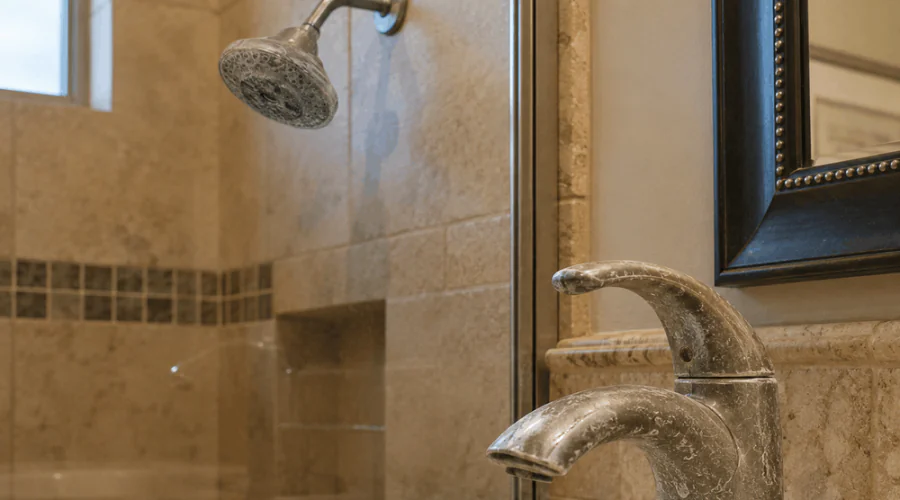
White crust on faucet aerators, spotting on glassware that will not wipe off, soap that does not lather, and a water heater making noise are all the same problem showing up in four places. If you are seeing more than one, it is worth testing.
What will fix hard water
A whole-home water softener removes calcium and magnesium before the water reaches anything. That protects the water heater, the fixtures, and the appliances at the same time. A reverse osmosis system does something different, polishing water at one tap for drinking and cooking.
Most Casa Grande homes benefit from both, because they solve different problems. The softener handles the whole house. The RO handles what you drink.
Not Sure Which One Your Home Needs?
Copperhead Plumbing installs and services water softeners and reverse osmosis systems across Casa Grande and Pinal County. Free estimates, flat rate pricing, and a one-year warranty on parts and labor.
Common Questions
How hard is the water in Casa Grande?
Well into the very hard range. The USGS sets that threshold at 180 mg/L, and reports across Pinal County run above it. Hardness varies by address, so your exact number depends on where you live.
Will a water softener fix the spots on my dishes?
Yes, in most cases. Spotting is mineral left behind when water evaporates. Removing the minerals removes the spots.
How often does a reverse osmosis system need new filters?
Most systems need pre-filters and post-filters replaced every six to twelve months, and the membrane every two to five years. Harder water shortens both intervals.
Does hard water damage pipes themselves?
Over long periods, yes. Scale narrows the interior of supply lines and reduces flow. It shows up first as pressure loss at fixtures farthest from the water heater.
Sources
U.S. Geological Survey — Hardness of Water · usgs.gov
Water Quality Association — Water Hardness Classification · wqa.org
U.S. Department of Energy — Water Heater Maintenance · energy.gov
Arizona Geological Survey — Groundwater in the Pinal Basin · azgs.arizona.edu
Chris Guerra
Licensed Arizona plumbing contractor, ROC #339040, and owner of Copperhead Plumbing Services in Casa Grande. Nearly a decade in the trade, working on the plumbing problems specific to Pinal County water and soil.
Chris Guerra
Licensed Arizona plumbing contractor, ROC #339040, and owner of Copperhead Plumbing Services in Casa Grande. Nearly a decade in the trade, working on the plumbing problems specific to Pinal County water and soil.
featured posts
More from the Copperhead Plumbing Blog

Tank, Tankless, or Heat Pump: Choosing a Water Heater in Casa Grande
Tank, tankless, or heat pump? How to pick the right water heater for an Arizona home, what sizing really means, and when replacing beats repairing.

When to Replace Your Water Heater in Arizona, and When to Repair It
Arizona heat and hard water shorten water heater life. Use these signs to decide whether a repair is worth it or replacement saves you money.

Slab Leak Signs Every Casa Grande Homeowner Should Know
Caliche soil and slab foundations are a common combination in Pinal County, and a contributing factor to slab leaks that go undetected for months. Here’s what to watch for.