
Slab Leak Signs Every Casa Grande Homeowner Should Know
Leaks & Pipes
By Chris Guerra · Licensed Plumber, ROC #339040 Updated July 2026 · 7 min read
In This Post
Have a plumbing problem?
Free estimates. Flat rate pricing. One-year warranty on parts and labor.
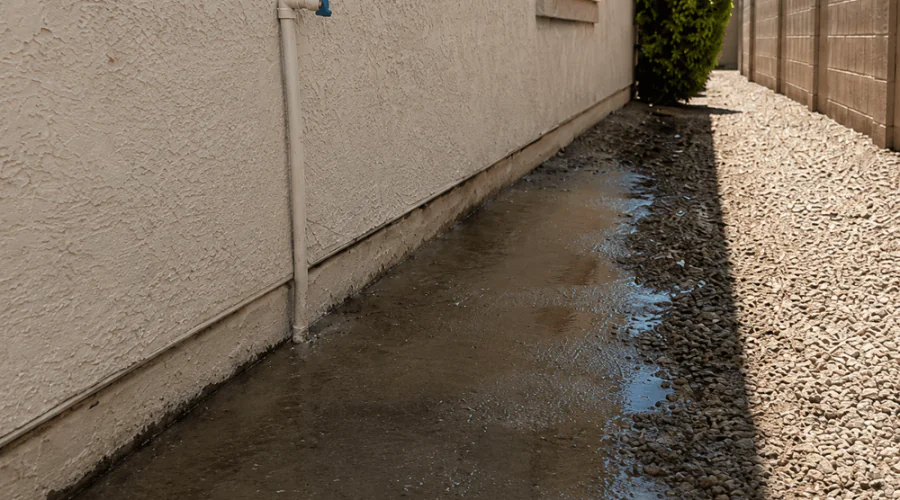
A slab leak is a leak in a water line running beneath the concrete foundation of your home. It is one of the few plumbing problems you can have for months without ever seeing a drop of water. By the time it surfaces, it may have already run up your bill, warped your flooring, or started moving the soil under your slab. Casa Grande homes sit on a combination that makes these leaks worth watching for. Here are the signs, why they happen here, and what to do the moment you suspect one.
The Warning Signs of a Slab Leak
A slab leak hides under the foundation, so you catch it by the signs it leaves everywhere else. Any one of these can have another explanation on its own. More than one at the same time is a strong reason to look closer.
- A water bill that jumped with no change in how much water you use
- The sound of running or hissing water when every fixture in the house is off
- A warm spot on the floor, which points to a leak in a hot water line
- New cracks in flooring, tile, or the walls above the slab
- Low water pressure that came on gradually with no other cause
- A musty smell, or mold and mildew, from moisture trapped under the floor
- Water pooling around the foundation or on the floor with no source above it
Why Slab Leaks Happen in Casa Grande
Two local conditions combine to make slab leaks a real concern here. First, most homes in the area sit on a concrete slab foundation, with the water lines running through or beneath it. Second, the desert soil across Pinal County shifts with moisture. Clay-bearing ground and the hard caliche layer common in this area swell when wet and shrink when dry, and that cycle puts constant pressure on the pipes routed through it. Add the hard water that corrodes pipe from the inside, and lines under the slab are stressed from more than one direction. A leak that starts small stays hidden under the concrete and keeps running until something above ground gives it away.
Why You Should Not Wait
A slab leak does not stop on its own, and every day it runs it does more damage. Water escaping under the foundation saturates the soil, which swells and then contracts once things dry out, and that movement is exactly the kind of stress a slab is not built to take. The leak also ruins flooring from below and feeds mold. On the mold point, the EPA is blunt about the order of operations. You stop the moisture source first, because once mold takes hold the cleanup is far larger than the original pipe repair. Catching a slab leak early is the difference between a targeted fix and a project that pulls in flooring, drywall, and foundation work.
quick check the moment you suspect a leak:
If more than one of the signs above lines up, there are a couple of things worth doing before you call. Check your water meter with every fixture and appliance off. If the dial is still moving, water is going somewhere it should not be, which is a strong sign of a hidden leak. Note whether the warm spots or sounds stay in one area of the house, since that helps narrow the location. Do not open the flooring or the slab yourself. A slab leak has to be pinpointed with detection equipment first, and cutting the concrete in the wrong place only adds cost without finding the source. The faster the leak is located, the smaller the repair tends to be.
How the Leak Gets Found and Fixed
Finding a slab leak takes electronic leak detection, which pinpoints the exact spot under the concrete before anything is opened. That accuracy matters, because it means the repair goes after the real failure point instead of guessing and cutting more of the slab than necessary. Once the source is located, the options range from accessing the leak directly to rerouting that section of line to avoid the slab entirely, depending on the pipe and the location.
We locate the leak, explain the options based on what the detection shows, and quote the price before any work starts. We handle leak detection and repair across Casa Grande, Pinal County, and the East Valley, including Chandler and Gilbert. If you suspect a slab leak, see water line and leak repair or call (520) 705-2134 to get it found before it gets worse.
Think You May Have a Slab Leak?
The sooner the source is located, the more targeted the repair can be. Copperhead Plumbing uses leak detection to find the failure point before recommending how to access or reroute the line.
Common Questions
What are the first signs of a slab leak?
The most common early signs are a water bill that rises with no change in usage, the sound of running water when everything is off, and a warm spot on the floor. Any of these, especially more than one together, is a reason to have it checked.
Can a slab leak go undetected for months?
Yes. Because the leak is under the concrete foundation, it can run for months before it surfaces through flooring, walls, or the water bill. That is what makes the early warning signs worth knowing.
How do plumbers find a slab leak?
With electronic leak detection, which pinpoints the exact location under the slab before anything is opened. That accuracy keeps the repair targeted and avoids cutting more of the foundation than necessary.
Why are slab leaks common in Arizona?
Because of the soil. Most Arizona homes sit on slab foundations, and the clay-bearing desert soil swells when wet and shrinks when dry. The Arizona Geological Survey has documented how much that ground can move, and that shifting stresses the pipes routed beneath the slab. Hard water corroding pipe from the inside adds to it.
Sources
Arizona Geological Survey — expansive soils in Arizona and their effect on foundations. azgs.arizona.edu
U.S. Environmental Protection Agency — mold and moisture guidance (address the moisture source first). epa.gov/mold

Chris Guerra
Licensed Arizona plumbing contractor, ROC #339040, and owner of Copperhead Plumbing Services in Casa Grande. Nearly a decade in the trade, working on the plumbing problems specific to Pinal County water and soil.
Chris Guerra
Licensed Arizona plumbing contractor, ROC #339040, and owner of Copperhead Plumbing Services in Casa Grande. Nearly a decade in the trade, working on the plumbing problems specific to Pinal County water and soil.

featured posts
More from the Copperhead Plumbing Blog
How Long Do Water Heaters Last in Arizona?
Arizona water heaters often fall short of the ten-year average. Why hard water and garage heat shorten lifespan, and the warning signs of a tank near the end.
Clogged Drain in Casa Grande? What Works, and What Makes It Worse
Which clogs you can clear yourself, why chemical drain cleaner often makes things worse, and the signs that mean the problem is the main line, not the sink.